11/05/2026
The Gear on the Bench
The recorder, the editors and the AI tools behind Prolific Futility, and what each one is actually used for in the making of a song.
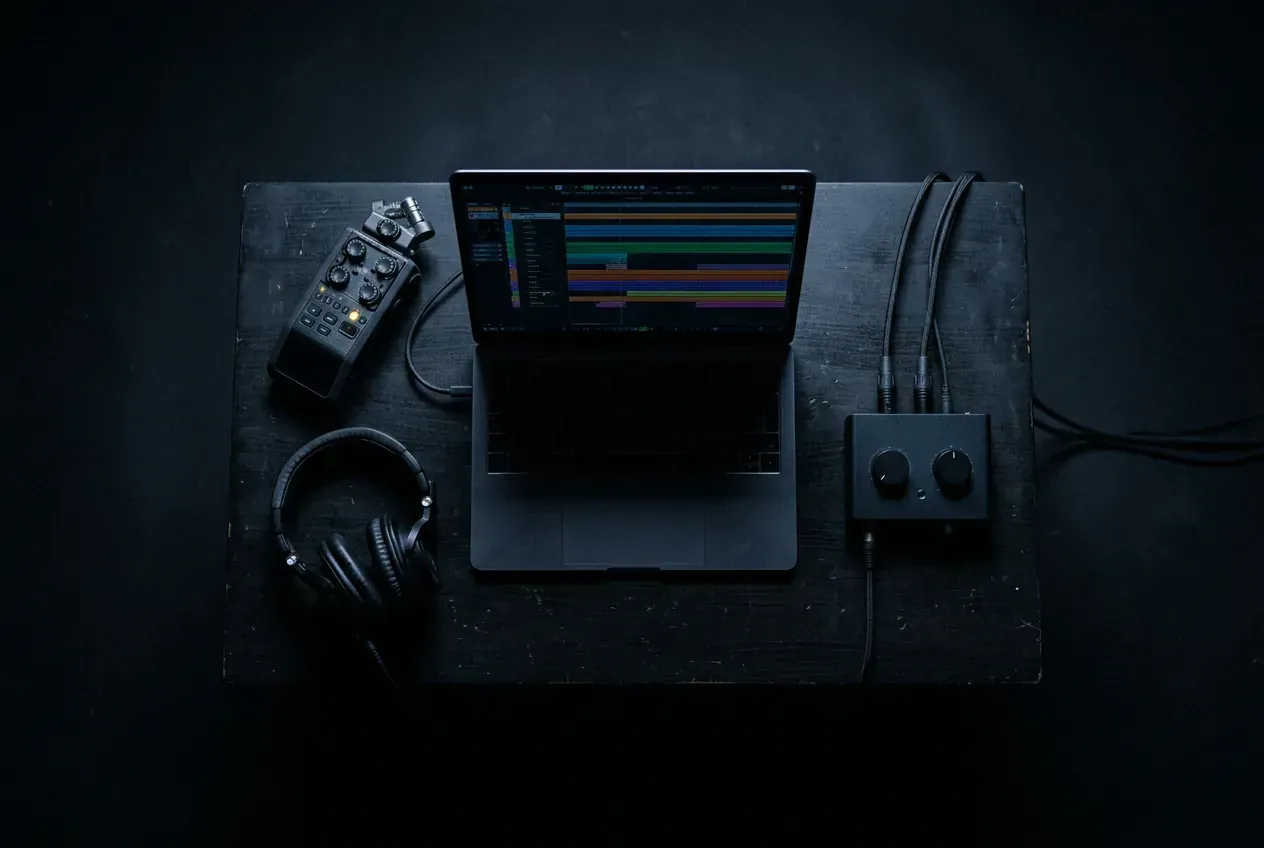
Short answer: the bench is small. A handheld recorder for vocals, Cubase Pro to build and mix the songs, WaveLab for cleanup and mastering, and one AI tool, Google Flow Music, to try variations. Everything named here is something actually used, not a wish list.
The bench at a glance
| Tool | What it does here |
|---|---|
| Zoom H4n Pro recorder | Recording vocals |
| Cubase Pro | Arranging, editing and mixing |
| WaveLab | Cleanup, filtering, levels and mastering |
| Google Flow Music | Trying variants, voices and instruments |
That is the whole list for now. Nothing is hiding off the edge of the table.
Capture
The recorder earns its place on vocals. It makes recording them easy, and the takes come back clean, at studio quality, without building a booth around the singer.
Build and mix
Most sessions are layering: stacking parts until the song fills out, which is where most of the fun is. The feature that earned its keep is VariAudio, Cubase's pitch editor. It helped find the right notes and chords, and tighten the timing along the way.
Master
Some jobs are simply easier in WaveLab: pre-processing audio, cleanup and filtering, boosting levels and the other small refinements that decide whether a track sounds finished.
Experiment
AI sits at the end of this list on purpose. It is the newest tool on the bench and the one that finishes nothing on its own: a variant it produces is raw material that still goes back through the editor.
For now that tool is Google Flow Music, and only that. Whatever it produces comes back into Cubase to be edited, and often played again from scratch, before it goes anywhere.
Researched and drafted with AI, then reviewed and edited by the site's editors.